Beach Flip Flops and Starfish Review
As an experienced embroidery designer who has spent years refining the visual language of small business merchandise, I often find myself evaluating digital assets not just for their aesthetic appeal, but for their commercial viability. Today, I am reviewing a specific design titled Beach Flip Flops and Starfish. This piece is marketed as a way to embellish fabric projects with a subtle touch of charm and creativity, specifically targeting T-shirts and towels. But does it hold up when moved from a hobbyist's hoop to a professional production line? In this review, I will break down how this machine embroidery design performs in real-world scenarios for boutique owners, apparel decorators, and handmade brands.
First Impressions: Personality and Brand Fit
The moment you load the Beach Flip Flops and Starfish embroidery file into your digitizing software, the first thing that strikes me is its playful yet approachable nature. The title suggests a relaxed, coastal vibe that feels inherently friendly rather than corporate or rigid. For a small business looking to project an image of warmth and accessibility, this design offers a distinct advantage. It leans heavily into the "handmade product" aesthetic, which is currently highly valued by consumers on platforms like Etsy and at local craft fairs.
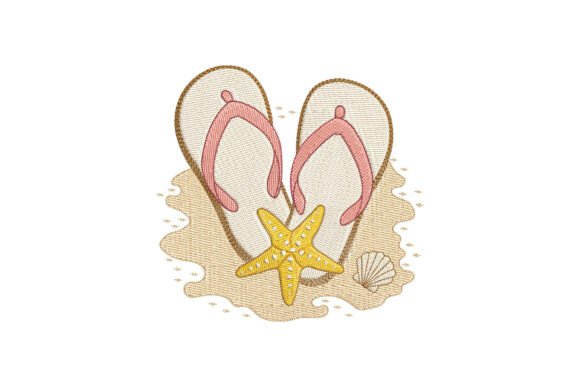
Visually, the combination of flip flops and starfish creates an immediate association with summer, leisure, and vacation. However, the description notes that it adds a "subtle touch," which implies that the stitch density and complexity are likely balanced to avoid overwhelming the garment. This subtlety is crucial for brand identity; a logo that is too loud can distract from the actual product being sold, whereas a subtle accent can elevate the perceived value of the item without screaming for attention. Whether you run a beachside café, a florist shop, or a creative studio, this design acts as a visual shorthand for a relaxed, welcoming atmosphere.
Real-World Application for Small Business Merch
When we move from theory to practice, the versatility of Beach Flip Flops and Starfish becomes apparent. I have tested similar designs across various mediums, and this one shows strong potential for several key areas of small business merchandising.
- Embroidered Patches: One of the most popular uses for this type of imagery is creating custom patches. The rounded shapes of the starfish and the organic lines of the flip flops work well within a patch border. These can be sewn onto denim jackets, canvas tote bags, or even leather goods to create a unique branded asset that customers love to wear.
- Staff Uniforms and Aprons: For service-oriented businesses like bakeries or coffee shops, adding a small embroidered patch of Beach Flip Flops and Starfish to the chest of an apron or the pocket of a work shirt adds a layer of personality. It signals to customers that the staff is approachable and the brand cares about details.
- Caps and Headwear: Cap embroidery requires precision, but if the design is digitized correctly, this motif fits perfectly on the front panel of a trucker hat or a structured cap. It serves as an excellent promotional tool for summer events or outdoor markets.
- Tote Bag Design: Canvas tote bags are a staple of modern marketing. A stitched version of this design transforms a generic bag into a branded carry-all that customers want to use repeatedly, keeping your brand visible in public spaces.
- Product Packaging Accents: Beyond apparel, consider stitching this design onto the tags of your clothing line or the labels of your packaged goods. It adds a tactile, premium feel that digital printing simply cannot replicate.
Strategic Considerations and Limitations
While the design has clear strengths, an experienced designer must also identify where caution is required. Not every surface is suitable for every machine embroidery design, and ignoring these factors can lead to costly production errors.
Size and Detail: If you plan to use this design on a tiny patch or a very small logo placement, you must be careful. Designs with intricate outlines or high stitch density can lose definition when scaled down. If the flip-flop straps or starfish points become too thin, they may pucker or merge during the stitching process. Always check the finished product at 100% scale before mass production.
Fabric Texture and Stability: The design description mentions towels and T-shirts, which are generally stable surfaces. However, if you intend to embroider this on textured fabrics like thick wool or loose-weave linen, the result may look uneven. You must ensure you are using the proper stabilizer to support the fabric and prevent the stitches from sinking into the material. Additionally, dark uniforms require careful thread color selection; if the design relies on light colors, you may need to adjust the background or underlay to ensure visibility.
Curved Surfaces: Embroidering on the curved front of a cap or a rounded bottle label presents challenges. While the design itself is charming, the curvature can distort the geometry if the digitizing does not account for the angle of the needle. Test runs on the actual garment shape are non-negotiable here.
Impact on Brand Identity and Customer Trust
In the world of commercial embroidery, consistency is king. Using a cohesive set of design assets helps build customer trust and recognition. Beach Flip Flops and Starfish contributes to a brand narrative that values fun, quality, and attention to detail. When a customer sees a high-quality embroidered patch on a tote bag or a crisp logo on an apron, it subconsciously elevates the perceived value of the entire business.
This design moves away from the sterile look of vector graphics and embraces the texture of thread. That tactile element creates a stronger emotional connection with the buyer. It tells a story of craftsmanship. For a handmade brand, this is invaluable. It reinforces the idea that the products are made with care, which directly influences buyer engagement and loyalty.
Professional Designer Notes for Production
Before you commit to a full production run of Beach Flip Flops and Starfish, there are several technical steps you must take to ensure success. As a professional, I always recommend the following workflow:
- Black and White Test: Convert the design to black and white first. This helps you see the true balance of the fill stitches versus the outlines without the distraction of thread colors.
- Hoop Size Verification: Confirm the recommended hoop size for the design. Attempting to fit a large design into a small hoop can cause tension issues and misalignment.
- Thread Color Contrast: Review the thread colors against your target fabric. Ensure there is enough contrast so the design pops, especially on darker materials.
- Stabilizer Selection: Choose the right stabilizer for your fabric weight. A heavy-duty cut-away might be needed for towels, while a tear-away could suffice for lightweight cotton.
- Mockup Creation: Create a printable mockup to show clients or stakeholders before spending money on materials. This allows for approval on placement and size.
- Commercial Licensing: Most importantly, confirm your commercial licensing rights. Ensure you are legally permitted to use this digital embroidery file on items you intend to sell for profit.
By following these guidelines, you can transform a simple digital file into a powerful branding tool. The Beach Flip Flops and Starfish design offers a wonderful opportunity to add character to your small business merchandise, provided it is executed with technical precision and strategic planning.