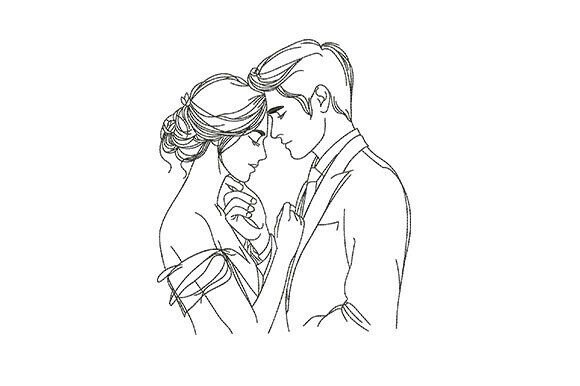
Wedding Bride and Groom Sketch
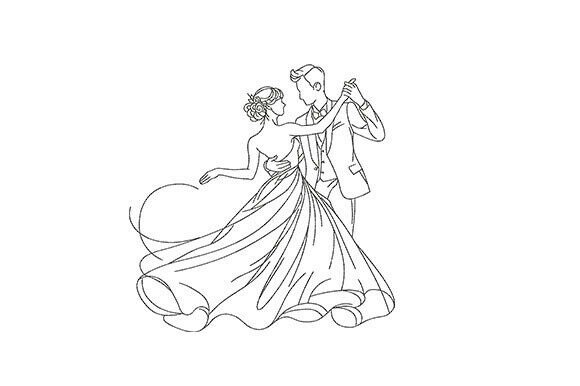
When I first opened the file for the Wedding Bride and Groom Sketch, my immediate thought wasn't about the romantic concept, but rather how this specific line work would translate from a digital screen to actual thread. As someone who reviews embroidery designs daily for both personal crafting and client projects, I look past the pretty preview image to see the structural integrity of the stitch plan. This design promises a "tender, forehead-to-forehead" moment captured in fine lines, which is a beautiful aesthetic goal, but it presents unique challenges when executed in machine embroidery.
The visual personality of this piece is undeniably elegant. It screams "fine art" rather than "cartoon." For an Etsy seller or a boutique owner looking to expand their wedding collection, this design fills a gap that often exists: the need for something sophisticated enough for a high-end gift but simple enough to not overwhelm a small garment. The mood is intimate and soft, relying on the negative space around the couple to define the shape. In a world of dense, heavy fill stitches, a fine line approach can feel refreshing, provided the execution holds up under tension.
Real-World Application: From Screen to Stitch
I recently considered using this design for a custom project involving a set of personalized aprons for a bride-to-be's bridal shower. The idea was to embroider the Wedding Bride and Groom Sketch on the chest area of linen kitchen towels. Linen is a textured fabric that loves embroidery, but it also reveals every flaw in stitch density. If the running stitches are too loose, the texture of the fabric will distort the fine lines of the sketch. If they are too tight, the fabric might pucker, ruining the delicate silhouette.
This scenario highlights why I treat every embroidery design with a critical eye before placing it in the hoop. The fine line nature of the Wedding Bride and Groom Sketch requires precise stabilizer selection. A cut-away stabilizer would likely be necessary here to prevent the thin lines from collapsing over time, especially since these items are meant to be washed repeatedly. For a commercial product like a tote bag design or a sweatshirt embroidery project, the durability of the stitch is just as important as the initial look.
Imagine this same design applied to a baby onesie or a nursery pillow cover. The romantic theme fits perfectly, but the scale becomes the deciding factor. On a tiny onesie, the fine details might get lost if the digitization isn't optimized for smaller hoop sizes. However, on a larger canvas like a decorative pillow cover or a tea towel, the sketch can breathe. The contrast between the white background and the dark thread (or vice versa) will determine whether the "forehead-to-forehead" connection reads clearly or looks muddy after stitching.
Navigating Fabric and Surface Challenges
Not every surface is a good match for this particular embroidery file. While it works beautifully on stable fabrics like cotton twill or denim, I would advise caution with stretchy knits or very thin materials. The tension required to pull the fine lines taut could cause a jersey t-shirt to warp or a sheer curtain to gather uncomfortably. Furthermore, textured fabrics like bouclé or heavy fleece might hide the intricate details of the sketch entirely.
Curved surfaces present another hurdle. If you are planning to use this design for an embroidered patch or a cap, the curvature of the hat crown can distort straight lines. The fine line style relies on clean geometry; a slight curve can make the groom's shoulder or the bride's veil look uneven. For curved applications, testing the design on a scrap of the actual material is non-negotiable. You must ensure the digitizer has accounted for the distortion inherent in caps and fitted hats.
Dense stitch areas are also a concern. While the description emphasizes "fine line," the transition points where lines meet or overlap can sometimes create thick knots of thread. If the stitch density is too high, the design will lose its airy, sketch-like quality and become a solid block of thread. Conversely, if the density is too low, the design may lack definition, making it look unfinished to a discerning buyer. This balance is crucial for maintaining brand consistency in a handmade shop.
Visual Appeal and Product Value
From a business perspective, the Wedding Bride and Groom Sketch offers a high perceived value. Customers paying for a personalized gift or a custom wedding favor want something that looks professional and artistic. A design that mimics hand-drawn art often commands a higher price point than a standard clip-art style motif. When presented correctly, this design elevates a simple item into a keepsake.
For a craft fair vendor or a small business owner, this design serves as a versatile asset. It can be used on holiday gifts, anniversary presents, or even as part of a boutique branding package. The simplicity allows for creative freedom in thread color choices. While traditional black or white thread works well, experimenting with metallics or pastel silks can change the entire vibe of the finished product without altering the design itself. This flexibility is key for commercial embroidery projects where customization is expected.
However, the success of the final product depends heavily on the presentation. If the edges are frayed or the back shows messy jump stitches, the elegance of the front design is compromised. Always inspect the small details and check the thread colors against your specific fabric palette. A design that looks perfect on a computer screen might clash with a navy blue hoodie or fade into a cream-colored apron. Creating printable mockups with different thread colors before committing to production can save significant time and money.
Essential Designer Notes for Success
Before integrating the Wedding Bride and Groom Sketch into your workflow, there are several technical checks you must perform. First, always test the design on scrap fabric that matches the weight and texture of your final product. This step reveals potential issues with puckering, thread breaks, or detail loss that cannot be predicted by software alone.
Review the stitch density carefully. If the design feels too dense, consider adjusting the settings or choosing a lighter thread weight to maintain the fine line aesthetic. Confirm the hoop size requirements to ensure the design fits your intended product dimensions without cutting off essential elements. Also, verify the licensing terms explicitly; some digital embroidery files restrict commercial use or require specific attribution for selling finished items.
Finally, don't forget the importance of proper stabilization. Using the wrong type of stabilizer can ruin even the best machine embroidery design. For this sketch, a tear-away or cut-away backing is likely needed depending on the fabric stability. By taking these practical steps, you ensure that the Wedding Bride and Groom Sketch delivers the romantic, high-quality result that customers expect, turning a simple embroidery project into a cherished memory.