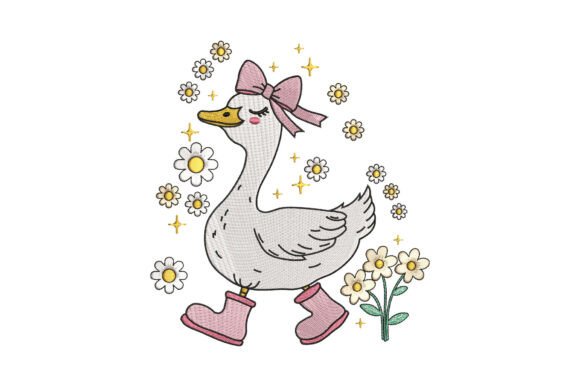
Silly Goose Girl: A Designer's Review for Small Business Merch
As an experienced embroidery designer who has spent years refining the art of digitizing for commercial use, I often look at a new design file and immediately ask myself one critical question: Does this work in the real world? When I first encountered the Silly Goose Girl machine embroidery design, my initial reaction was one of intrigue. The description promises a "subtle touch of charm and creativity," which is exactly what many boutique brands are chasing today. But for small business owners, Etsy sellers, and apparel decorators, charm alone isn't enough; the design must hold up under the rigors of production and stand out on a finished product.
In this review, I am putting Silly Goose Girl through its paces as if it were a potential asset for a local café, a handmade craft shop, or a creative studio looking to expand their branded merchandise line. We will dive deep into how this embroidery file performs when applied to patches, staff uniforms, aprons, caps, and tote bags, ensuring you understand its strengths and limitations before committing to a bulk order.
First Impressions: Personality and Brand Fit
The title Silly Goose Girl combined with the category of Birds suggests a playful, approachable, and perhaps slightly rustic or whimsical aesthetic. In the crowded market of small business merch, standing out requires a distinct visual personality. This design feels like it belongs to a brand that values warmth, humor, and a human connection over sterile corporate minimalism.
For a bakery, florist, or pet brand, this design offers a perfect opportunity to inject character into your products. It does not scream "premium luxury" in a traditional sense; instead, it whispers "handmade product" with a friendly wink. If your brand identity relies on being accessible, fun, and community-focused, Silly Goose Girl could be a powerful tool for building customer trust and engagement. However, if you run a high-end law firm or a sleek tech startup, this playful avian theme might clash with your desired professional image.
Real-World Application: Where Silly Goose Girl Shines
The true test of any digital embroidery file is how it translates from a screen to a physical object. Let us imagine a scenario where a small coffee shop wants to launch a line of branded items. Here is how Silly Goose Girl could function across various applications:
- Embroidered Patches: This design has strong potential as a detachable patch. It can be sewn onto denim jackets, canvas backpacks, or the collars of chef coats. As a standalone embroidered patch, it adds a unique flair that customers love to collect and display.
- Staff Uniforms and Aprons: For a team environment, placing this design on the chest of a work shirt or the pocket of an apron embroidery project creates a cohesive yet fun team identity. It softens the uniform look without sacrificing professionalism.
- Tote Bag Design: Tote bags are a staple for Etsy branding and event giveaways. Stitching Silly Goose Girl on a sturdy cotton tote provides a durable, washable logo that travels with the customer, effectively acting as a walking advertisement for your business.
- Cap Embroidery: While curved surfaces present challenges, a well-digitized version of this design could serve as a cute accent on the front or side of a baseball cap, particularly for casual outdoor events or farmer's markets.
- Product Packaging Accents: Consider stitching a small version of the design onto the tags of your handmade goods or the corners of gift boxes. This level of detail elevates the unboxing experience and signals quality to the buyer.
Critical Considerations and Potential Pitfalls
While the concept is charming, every commercial embroidery project comes with technical constraints. As a designer, I must advise caution in specific areas where Silly Goose Girl might struggle depending on the execution.
Small Patch Sizes: If you intend to create tiny patches for lapels or miniature labels, you must evaluate the stitch density and detail level. Complex outlines or fine lines can merge together when stitched too small, turning a crisp design into a muddy blob. Always test the design at 100% scale before mass production.
Curved Surfaces and Caps: Embroidering on a curved cap front requires precise hoop placement and potentially specialized stabilizers. If the design includes intricate details around the edges, they may distort as the fabric stretches over the curve. Ensure the design has been digitized specifically for curved surfaces if this is your intended use.
Fabric Texture and Color Contrast: The description mentions suitability for T-shirts, towels, and pillows. However, textured fabrics like heavy terry cloth or loose-weave linen can make the stitches sink in or appear uneven. Furthermore, if you plan to embroider this on dark uniforms, you must verify the thread colors. Light-colored threads on dark backgrounds require a dense underlay, which can add bulk and stiffness to the fabric. Conversely, dark threads on light fabrics need to be checked for coverage.
High Wash Cycles: For items like aprons or work shirts that undergo frequent industrial washing, the durability of the design is paramount. Designs with long, floating stitches or excessive detail are prone to snagging or unraveling over time. Ensure the digitization uses appropriate satin stitches and secure jump stitches to maintain integrity.
Impact on Brand Identity and Customer Perception
Choosing the right design assets is a strategic decision that influences how your audience perceives your value. A consistent visual language builds recognition. If Silly Goose Girl aligns with your brand voice, it reinforces the idea that you care about the little details. It transforms a generic item into a memorable piece of custom apparel.
When customers see a well-executed, charming design on a high-quality product, their perception of the overall brand value increases. It suggests that you have put thought into your packaging and your team's attire. This attention to detail fosters loyalty and encourages repeat business. However, poor execution—such as puckered fabric or misaligned stitching—can damage that trust instantly. Therefore, the quality of the final finished product is just as important as the design itself.
Practical Notes for the Production Phase
Before you send Silly Goose Girl to the production floor, follow these essential steps to ensure success:
- Test in Black and White: Create a grayscale mockup to check the contrast and balance of the design elements without the distraction of color.
- Review Thread Colors: Select thread colors that complement your brand palette but also offer sufficient contrast against the target fabric.
- Inspect Spacing and Hoop Size: Confirm that the hoop size required for the design fits your equipment and the garment area you intend to use. Ensure there is adequate spacing between the design edge and the garment seam.
- Check Stabilizer Requirements: Use the proper stabilizer for your fabric type. Heavy-duty tear-away or cut-away backing may be necessary for stretchy knits or heavy towels to prevent distortion.
- Create a Printable Mockup: Before running a full batch, produce a printable mockup or a single sample to get client approval or to visualize the final result.
- Compare Assets: Place the design beside other logos or text elements to ensure visual consistency across your entire brand kit.
- Verify Commercial Licensing: Most importantly, confirm that you have the correct commercial licensing rights to use Silly Goose Girl for resale items. Using a personal license for business merchandise can lead to legal issues.
If the specific stitch count, file format, or exact hoop dimensions are not listed in your product details, do not assume they fit your needs. Contact the provider or request a sample file to verify compatibility with your specific machinery.
In conclusion, Silly Goose Girl offers a delightful blend of charm and creativity that can significantly enhance the appeal of brand identity projects. Whether used as a patch, a cap design, or a subtle accent on a tote bag, it has the potential to become a signature element of your small business. By approaching the production process with careful testing and strategic planning, you can turn this digital design into a tangible asset that drives sales and delights your customers.